Accessibility in education is receiving a fast and effective transformation to ensure individuals with disabilities have access to inclusive services, adjustments and technology to succeed in education. Schools and universities are constantly trying to improve accessibility in the classroom and in their digital infrastructure but struggles do remain due to lack of resources and funding.
In the USA, the Department of Justice declared a new rule under the Americans with Disabilities Act (ADA) which requires schools, colleges and universities to provide websites and mobile apps that meet WCAG 2.1 Level AA standards.
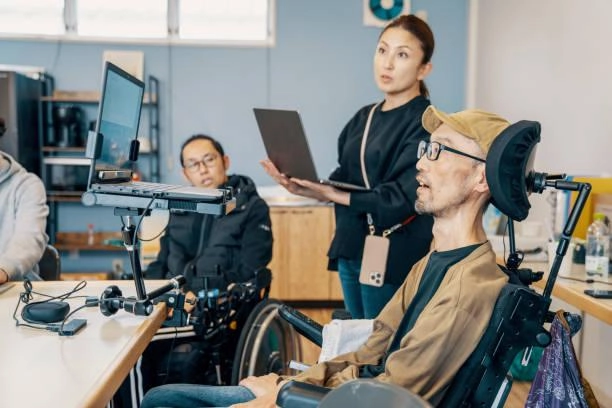
Education Accessible Technology
Educational institutions are constantly improving their accessible digital learning tools to encourage inclusive learning by supporting diverse needs. Accessible technology includes:
- Speech to text tools
Speech to text allows students to speak instead of typing for those with motor challenges and text to speech reads online texts out loud to help those with visual impairments or learning difficulties. This boosts both engagement and independence for students with disabilities.
- Reading support
Technology such as Microsoft’s Immersive Reader or Read&Write provides text to speech, line focus and dictionary tools to help individuals with disabilities read what is required in class. This enhances comprehension and understanding in lessons.
- Visual and audio support
Tools including screen readers, auto captions, narration and transcripts are vital to providing effective visual and audio support for individuals with hearing or visual impairments.
- Accessible online documents
Certain tools make online documents such as PDFs and images easier to read, edit and interact with. Course material is made more accessible with alternative formats available depending on the individual’s needs.

Accommodations
- Course materials including textbooks, worksheets and notes are available in accessible formats such as Braille, screen readers, large print or e-text.
- Lectures and lessons may include a live sign language interpreter or real-time captions on recordings so students with impairments or disabilities are able to follow the course.
- Exams and tests may be performed in separate rooms with the use of assistive technology and time extensions given to reduce distractions and help students with motor or cognitive disabilities.
- Classroom and campus adjustments including physical access in classrooms and buildings such as ramps, disabled parking, elevators, adjustable furniture and accessible bathrooms. Sensory and quiet rooms also give students a calming place to visit when moments get too overwhelming.
Education accessibility is certainly improving all the time with the increase of digital tools and accommodations being made to help support students with disabilities. There are still various challenges in keeping up with the fast turnaround due to lack of funds and resources but steps are slowly being made every day.
Path-Now is an accessible platform which provides clients with an extensive selection of disability resources, programs and support in California.
